

Which Wholesale Platforms Ship Fastest to US Addresses? Same-Week Restock Options Ranked

Table of Contents
- Why restock speed makes or breaks seasonal retail margins
- Domestic warehouse vs overseas direct: how each model handles delivery timelines
- Top wholesale platforms ranked by US delivery speed
- The real cost of fast shipping: freight, duties, and hidden surcharges
- How to set up a restock workflow that avoids rush-order premiums
- Common mistakes buyers make when speed is the priority
- Quick-reference: delivery timeline comparison table
- FAQ
Key Takeaways
- Domestic warehouse platforms like Uline and Spocket deliver within one to three business days, while overseas direct shipping takes seven to fifty days depending on method.
- Express shipping from overseas suppliers costs two to five times more than standard freight, and rush orders eat into margins quickly.
- Pre-positioning inventory in US warehouses through a structured restock workflow eliminates most emergency shipping costs.
Why restock speed makes or breaks seasonal retail margins

A sold-out product means missed revenue. Retail buyers who cannot restock fast enough lose repeat customers to competitors, and during Q4 holiday peaks a two-week restock delay can cost a small retailer ten to twenty percent of seasonal revenue. Empty shelves do not generate invoices.
Speed matters for everyday inventory too. Buyers who restock within the same week capture demand at full margin, while buyers who wait three weeks end up paying express freight fees just to catch up.
Fast restock cycles also reduce the capital tied up in safety stock. When a supplier delivers in two days, you do not need four weeks of backup inventory. That cash goes toward product testing or marketing instead.
Put simply, restock speed directly affects profitability. The platform you choose determines how fast money comes back to your shelf.
Domestic warehouse vs overseas direct: how each model handles delivery timelines
Two supply chain models dominate wholesale delivery to US addresses, and each handles speed differently.
Domestic warehouse model
Suppliers pre-position inventory in US-based distribution centers. When you place an order, the goods ship from inside the country. Transit times typically range from one to five business days via standard ground carriers.
Short distances mean fast delivery. The drawback is that domestic warehousing adds storage costs passed into product pricing. You pay more per unit but receive it much sooner.
Uline operates this model at scale. They ship all orders placed before 6:00 PM CT the same day, according to their shipping FAQ. Most orders arrive the next business day from their seven US distribution centers.
Overseas direct model
Goods ship directly from factories in China, Vietnam, or other manufacturing hubs. Express couriers like DHL and FedEx deliver in three to ten business days. Air freight takes seven to fifteen days. Ocean freight requires twenty-five to fifty days, based on data from ImagineShip.
Factory-direct pricing often runs thirty to fifty percent lower than domestic warehouse pricing, but you trade that savings for longer wait times. Ocean freight is cheap but painfully slow. Express shipping is fast but expensive.
Some overseas suppliers now offer hybrid options. Alibaba.com has expanded its overseas warehouse network, and products stored in US facilities ship with domestic transit times while retaining much of the factory-direct pricing advantage.
Top wholesale platforms ranked by US delivery speed
Below is how major wholesale platforms rank on delivery speed to US addresses, from fastest to slowest.
1. Uline: Same-day ship, next-day delivery
Uline is the speed benchmark for US wholesale distribution. Orders placed before 6:00 PM CT ship the same day, and most arrive the next business day. Their seven US distribution centers provide broad coverage, with over ninety-nine percent of orders shipping complete.
2. Spocket: One to three days domestic transit
Spocket connects buyers with US-based suppliers who ship domestically. Typical transit runs one to three business days, with total fulfillment in two to five days. The free basic tier works for starters, and premium plans start around $39.99 per month.
3. Trendsi: Two to five working days
Trendsi ships from US warehouses with delivery in two to five working days. The platform charges no subscription fees, which keeps overhead low for small buyers. Trendsi focuses primarily on fashion and apparel categories.
4. Faire: Variable, brand-dependent delivery
Faire connects retailers with independent brands. Shipping speed depends on where each brand fulfills orders. US-based brands typically deliver in three to seven business days. In May 2026, Faire announced an expanded UPS partnership to reduce shipping costs. Faire also offers net-60 payment terms for qualified buyers.
5. Alibaba.com Ready to Ship: Three to ten days express
Alibaba.com offers multiple shipping tiers. Express delivery through DHL, FedEx, or UPS takes three to ten business days. Air freight runs seven to fifteen days. Ocean freight stretches twenty-five to fifty days. The Ready to Ship program dispatches quickly with lower minimums, and combining shipments can reduce costs by twenty to forty percent.
6. DHgate: Three to thirty days depending on method
DHgate ships primarily from Chinese suppliers. Express options deliver in three to seven days. Standard postal shipping takes ten to thirty days. Some sellers maintain US warehouse inventory, which cuts transit to domestic speeds.
7. ThomasNet: Supplier-dependent, domestic sourcing
ThomasNet is a directory of US-based manufacturers and industrial suppliers. Delivery speed depends on the individual supplier. Most listed companies ship domestically with ground transit of two to seven business days.
8. Global Sources: Overseas timelines apply
Global Sources connects buyers primarily with Asian manufacturers. Express options take five to ten business days. Standard air freight runs ten to twenty days. Ocean freight takes thirty to fifty days. The platform suits buyers placing large production orders where cost matters more than speed.
The real cost of fast shipping: freight, duties, and hidden surcharges
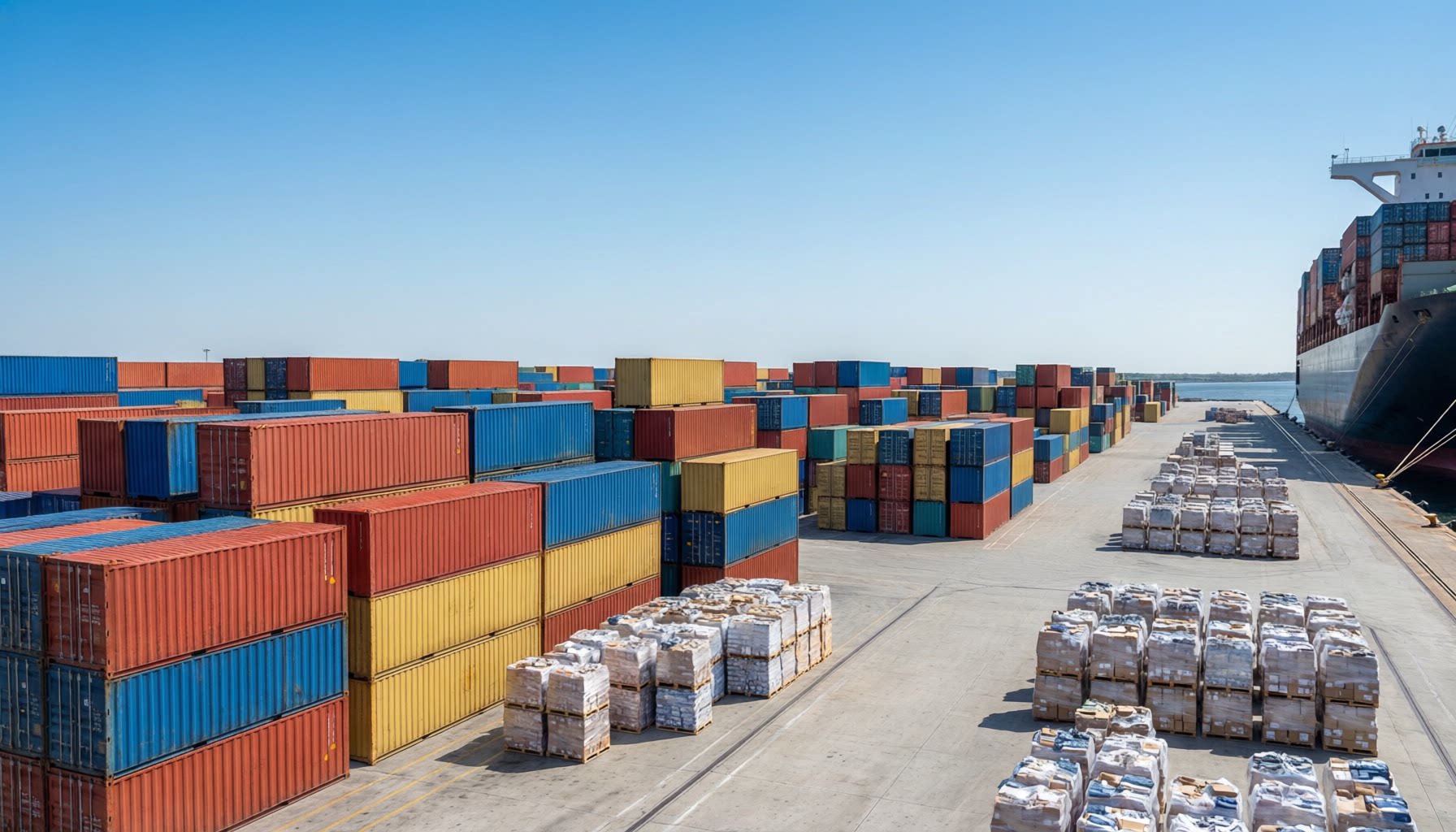
Express courier rates from overseas typically cost three to five times more than standard ocean freight. A kilogram of goods shipped by air express from China might cost $8 to $15, while the same shipment by sea runs $1 to $3 per kilogram. Those margins compound quickly across a full container load.
Duties add another cost layer for international orders. The US de minimis threshold sits at $800. Orders below that value generally clear customs duty-free. Orders above that threshold face tariff rates from zero to twenty-five percent depending on product category. A $2,000 wholesale order with a 12% duty rate adds $240 to your landed cost.
Platform fees deserve scrutiny too. Subscription-based platforms like Spocket charge monthly access fees that inflate your effective per-unit cost. A $39.99 monthly subscription makes sense at high volume. It does not if you place four small orders per quarter.
Domestic platforms embed storage costs into their product pricing. You pay a higher unit price but avoid separate freight and duty line items. Always compare the final delivered cost per unit, not just the catalog price.
The cheapest wholesale price often becomes the most expensive delivered price once you factor in speed premiums, duties, and platform fees.
How to set up a restock workflow that avoids rush-order premiums
The best way to avoid paying for speed is to stop needing it. A disciplined restock workflow keeps inventory flowing without emergency shipping bills.
Track sell-through rates weekly
Monitor how fast each SKU moves off your shelf. Calculate the weekly sell-through rate for every product. Items that sell through in under two weeks need faster restock cycles.
Set reorder points based on lead time
Your reorder point should cover demand during the supplier lead time plus a safety buffer. If a supplier takes ten days to deliver and you sell five units per day, your reorder point is fifty units plus a ten-unit buffer, or sixty units total. Place the order before you hit that threshold.
Pre-position inventory in US warehouses
For overseas suppliers, ship larger batches to a US-based third-party logistics provider. You pay ocean freight rates for the bulk shipment but get domestic delivery speed when you need replenishment.
Stagger orders across multiple suppliers
Do not rely on a single supplier for every product. Spread orders across domestic and overseas sources. Use domestic platforms for fast-turn items and overseas suppliers for high-volume, lower-urgency replenishment.
Build seasonal buffers early
Place peak-season orders at least eight to twelve weeks before demand hits. Ocean freight from Asia takes four to seven weeks including production time. If you wait until September to order holiday inventory, you will end up paying express shipping fees to make your shelf on time.
Common mistakes buyers make when speed is the priority
Rushing to restock creates its own expensive problems. These are the traps buyers fall into most often.
Confusing transit time with total delivery time
A supplier advertises three-day shipping. That number only counts transit, not order processing, production time, customs clearance, or last-mile delivery. Always ask for the total door-to-door timeline.
Paying for express when ground shipping would work
Not every restock order needs overnight delivery. If your reorder point is set correctly, standard ground shipping arrives well before you run out. Express premiums make sense for genuine emergencies, not for routine replenishment.
Ignoring duties on overseas orders
Buyers often compare overseas catalog prices against domestic prices without calculating landed cost. A product listed at $4 from a Chinese supplier might cost $5.50 after duties and express shipping. The same item from a US warehouse at $5.25 is actually cheaper delivered.
Over-ordering to qualify for free shipping thresholds
Some platforms offer free shipping above a certain order value. Buyers add extra units to hit the threshold, then sit on excess inventory for months. Shipping savings disappear when you factor in storage costs and tied-up capital.
Single-sourcing for speed convenience
Using one fast supplier for everything feels efficient but creates dangerous dependency. If that supplier has a logistics disruption, your entire restock pipeline stops. Maintain at least two qualified sources for every critical SKU.
Quick-reference: delivery timeline comparison table
| Wholesale Platform US Delivery Speed Comparison | |||||
|---|---|---|---|---|---|
| Platform | Fastest US Delivery | Standard Delivery | Shipping Origin | US Warehouse Available | Best For |
| Uline | Next business day | 1 to 2 days ground | US domestic | Yes, 7 US distribution centers | Packaging, shipping supplies, industrial goods |
| Spocket | 1 to 2 days | 2 to 5 days | US/EU domestic | Yes, US and EU suppliers | Ecommerce dropshippers needing fast restock |
| Trendsi | 2 to 3 days | 2 to 5 days | US domestic | Yes, US warehouses | Fashion and apparel retailers |
| Faire | 3 to 5 days (US brands) | 3 to 10 days | Varies by brand | Depends on individual brand | Boutique retailers seeking unique goods |
| Alibaba.com | 3 to 10 days (express) | 7 to 50 days | Overseas / some US | Yes, select overseas warehouse items | Buyers wanting factory-direct pricing at scale |
| DHgate | 3 to 7 days (express) | 10 to 30 days | Primarily China | Yes, select sellers | Small buyers ordering mixed product lots |
| ThomasNet | 2 to 5 days | 2 to 7 days | US domestic | Yes, US manufacturers | Industrial and custom product sourcing |
| Global Sources | 5 to 10 days (express) | 10 to 50 days | Primarily Asia | Limited | Large production orders where cost leads |
FAQ
Which wholesale platform delivers fastest to US addresses?
Uline delivers the fastest among major wholesale platforms. Orders placed before 6:00 PM CT ship the same day, and most arrive the next business day from their seven US distribution centers. For consumer goods and ecommerce, Spocket offers one to three day domestic transit through its US supplier network.
Can Alibaba.com ship to the US in under a week?
Yes, through express courier options. Alibaba.com suppliers using DHL, FedEx, or UPS deliver to US addresses in three to ten business days. The Ready to Ship program dispatches quickly with lower minimums. Ocean freight and standard air cargo take seven to fifty days.
Do wholesale platforms charge extra for fast shipping?
Most platforms do not charge explicit fast-shipping surcharges. Express courier rates are simply higher than standard rates. Domestic platforms like Uline include fast shipping in their pricing. Always compare total landed cost, including freight, duties, and subscription fees.
What is the US duty-free threshold for wholesale imports?
The US de minimis threshold is $800 per shipment. Orders valued below $800 generally enter the country without duty charges under Section 321. Orders above that amount face tariff rates that vary by product category and country of origin, typically ranging from zero to twenty-five percent.
How can I avoid paying rush-order shipping fees?
Set reorder points based on supplier lead time and weekly sell-through rate. Place restock orders before inventory drops below the threshold. For overseas suppliers, pre-position bulk inventory in a US third-party warehouse. Building seasonal buffers eight to twelve weeks ahead of peak demand eliminates expensive emergency shipments.
Start your borderless business here
Tell us about your business and stay connected.


Related Reading

Keep up with the latest from Alibaba.com?
Subscribe to us, get free e-commerce tips, inspiration, and resources delivered directly to your inbox.


