

Private Label and Low MOQ Customization for Boutiques: Build Your Own Brand Line

Table of Contents
- The two walls every boutique hits before an own-brand line
- Why distributors and cut-and-sew studios carry high thresholds
- Low MOQ and sample packs: test a line before you fund it
- Custom packaging and branding: OEM/ODM, labels, and assortments
- Ready-made marketing assets: where boutiques actually get stuck
- The bottom line for your first own-brand drop
- FAQ
Key takeaways
- Two things block a first private-label line: large minimum order quantities, and no professional photography or video to merchandise the collection.
- Boutique private label low MOQ suppliers increasingly accept 20 to 50 units per style rather than per color or per size.
- OEM and ODM packaging applies your label, hangtag, and mailer before the merchandise ships.
- The real edge is ready-made marketing assets. Ask for white-background photography and short video with every order.
The two walls every boutique hits before an own-brand line
Most boutique owners tell the same story. You resell the same goods as every shop on your street. You want a private-label collection that is yours alone. That wish sits behind every search for boutique private label low MOQ suppliers.
Two obstacles stop most independent owners. Owners rarely picture the two together, and that split makes each one feel harder than it is.
The first obstacle is the minimum order quantity. A supplier advertises a low minimum of 50 units. The agreement then applies that figure separately to every color and every size. Your real commitment jumps to 200 or 300 units, because the advertised and effective numbers rarely agree.
The second obstacle is presentation. Even after the merchandise ships, you have nothing to advertise it with. There is no white-background photography and no short-form video. Commissioning a professional studio session can cost more than the entire inventory.
Set the problem correctly. It is not minimum quantities alone or design alone. The conventional chain splits the whole job across five vendors: factory, label printer, packaging supplier, sample house, and photographer. Each one adds cost and delay.
The suppliers worth shortlisting this year remove both obstacles inside a single order. They pair a true style-level minimum with sample packs, OEM or ODM packaging, and photography and video you can use right away. The rest of this guide shows how to weigh that combination.
Why distributors and cut-and-sew studios carry high thresholds
Start with the routes you are usually told to use. Each looks good in theory. Each also carries a threshold that stops a smaller owner.
Domestic branded wholesale and showrooms feel welcoming at first. Opening orders can be as modest as $100 to $200, and favorable payment terms ease cash-flow pressure. The catch is the label. The merchandise arrives wearing the manufacturer's brand, and you cannot rebrand it without opening seams and retagging every piece by hand.
Domestic small-batch cut-and-sew studios do serve boutiques. Many accept runs of roughly 100 to 250 units per style. But before any fabric is cut, you pay for pattern making, grading, and preliminary sampling. Those setup fees often climb into the low thousands, and lead times run many weeks.
Overseas mass OEM gives you the lowest per-unit cost. It usually wants 500 to 2,000 units or more. Lead times commonly stretch from 8 to 16 weeks while you arrange your own freight.
The honest conclusion: each of these routes solves only part of the problem. Each also forces you to coordinate the rest with separate vendors.
| Private-label readiness by sourcing route | ||||
|---|---|---|---|---|
| Route | Typical MOQ per style | Your own label? | Upfront setup | Photos and video |
| Domestic branded wholesale | Low opening order, $100 to $200 | No, carries the maker's brand | Minimal | Not included |
| Domestic cut-and-sew | 100 to 250 units | Yes, after pattern and sample fees | High, pattern and grading | You arrange it |
| Overseas mass OEM | 500 to 2,000 plus units | Yes, at scale | Low per unit, high volume | You arrange it |
| Small-B platform order | 20 to 50 units | Yes, via OEM or ODM | Sample pack covers it | Often bundled |
Low MOQ and sample packs: test a line before you fund it
This is where the lowest MOQ wholesale for boutiques starts to feel workable. A small-business-friendly supplier sets the minimum at the style level instead of the SKU level, so you think in 20 to 50 units total. That is one or two colorways with an open size run, not a rigid pre-pack.
Check every minimum three separate ways before you rely on it. Ask for MOQ per style, per color, and per size. The per-style figure is the one that matters. If a supplier will not state it plainly, treat the advertised low MOQ with care. The OEM and ODM customization guidance on Alibaba.com frames this same per-style reasoning for smaller apparel buyers (Alibaba.com OEM customization guide).
Samples are your testing valve. Before funding a whole production run, order a single prototype or a curated starter collection. A blank-and-fabric assortment lets you judge fit, drape, and colorfastness by hand. Samples often cost about two to three times the unit wholesale price and take roughly 7 to 14 business days. Many suppliers now include sample-pack photography so you can draft the listing earlier.
Know the trade-off built into micro-MOQ pricing. A run of 25 or 50 units costs more per piece than a run of 300. But it sharply cuts the total capital you put at risk. You pay a little more per garment to test cheaply, then scale only what actually sells. This logic fits boutiques entering small-batch or unproven categories, where demand looks real but is not yet proven.
Custom packaging and branding: OEM/ODM, labels, and assortments
Two manufacturing models drive wholesale custom packaging for boutiques. Under OEM you supply the design and technical spec. Under ODM you pick a factory-developed silhouette and add your own branding. Most boutiques have no design team, so ODM plus relabeling is the more practical path. You take a ready-made shape and put your name on it.
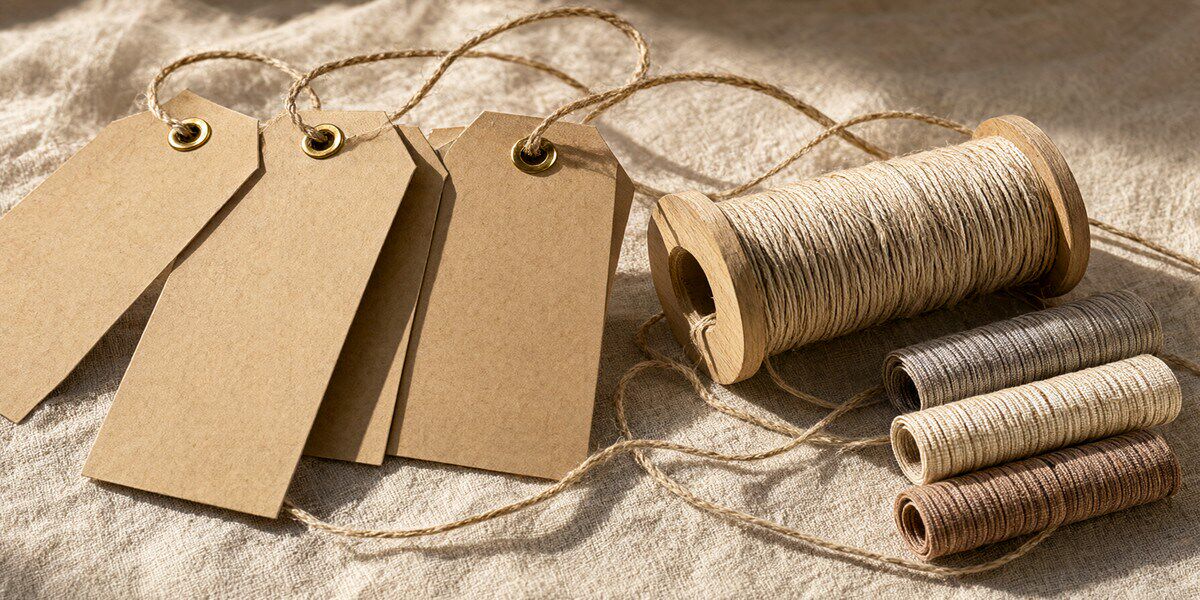
Then weigh the branding a vendor applies for you, ordered alongside the run. The usual set is woven damask neck labels, heat-press labels, custom hangtags finished with string or eyelet, and branded frosted zipper mailers. Your merchandise arrives wearing your identity, and you never buy industrial equipment.
Per-unit label pricing stays affordable even at small scale. A pricing guide for custom woven labels puts common rates near $0.15 to $0.35 each, with minimum runs of 500 to 1,000 labels (Golden Brand Fashion label pricing). Printers hold unused stock for later reorders, so one setup covers many production runs.
One compliance point is worth stating plainly. Swapping a manufacturer label for your own means meeting textile rules. Fiber content, country of origin, and a registered business name must appear on apparel sold in the United States. The Federal Trade Commission sets these terms under the Textile and Wool Acts (FTC labeling guidance).
Finally, rethink the assortment. The rigid pre-pack, often 1:2:2:1 across sizes S through XL, leaves slow sizes sitting on your floor. Ask instead about suppliers offering open sizing and split-color allocation. That flexibility lets you tilt a modest run toward your real customers, for example 0:2:3:1. This one change cuts markdowns on sizes that never sell.
| Typical branding and packaging costs at boutique scale | ||
|---|---|---|
| Item | Per-unit cost | Typical MOQ |
| Woven neck label | $0.15 to $0.35 | 500 to 1,000 |
| Custom hangtag | $0.20 to $0.55 | 250 to 500 |
| Branded poly mailer | $0.28 to $0.65 | About 500 |
Ready-made marketing assets: where boutiques actually get stuck
Most guides skip what comes next. Producing a private-label collection is only half the job. Without an in-house creative team, you still cannot market it well. Shoppers dismiss dim phone snapshots and cluttered backgrounds fast. A polished listing is your digital shelf, and a bare product with no camera leaves it out of reach.
Price the do-it-yourself route honestly. A recent look at product photography cost puts a modest collection at roughly $1,400 to $4,049 in total. Per-image rates often fall between $15 and $39, and a full studio day reaches the low thousands once you add the photographer, model, and retouching (Nightjar cost breakdown). For a low-MOQ trial order, that spend alone can wipe out your margin.
This is where the model pays off. Small-business-friendly suppliers increasingly bundle assets with the merchandise. They give you white-background e-commerce photography, ghost-mannequin imagery, on-model visuals, and short-form video. All of it drops straight into Shopify, Instagram, and TikTok Shop. Set against a do-it-yourself session, the bundle pushes the cost of your launch media near zero. That is why boutique suppliers sample pack marketing assets has become a phrase owners actually search.
Know what to ask for before you place the order. First, a downloadable asset pack included with the run. Second, commercial usage rights that let you edit, crop, and watermark freely. Third, vertical short-form video made for social channels, not just still images. Fourth, sample-pack photography so you can build the listing before the bulk goods leave.
Keep expectations realistic. Supplier stock imagery can look generic. Plan to add your watermark and adjust backgrounds so the collection reads as yours. The bundle saves the photography budget. It does not replace the last round of brand polish.
The bottom line for your first own-brand drop
Step back and compare the two paths. Reselling the same wholesale lines as every shop nearby means competing mainly on price. A small private-label line competes on exclusivity instead. That exclusivity is the one defensive edge a boutique can really hold. It also supports a higher markup than standard keystone resale pricing.
Screen boutique private label low MOQ suppliers against a single bundle. The bundle is a true style-level low MOQ of 20 to 50 units, a sample or starter pack, OEM or ODM custom packaging, flexible size and color distribution, and ready-made photography and video. A supplier covering all four in one order lets a single purchase launch an entire brand line.
That boutique-feasible band now exists. Pair it with a sample pack and a bundled asset package, and your first own-brand launch stops being a big leap. It becomes a small, tested, sellable step you can fund and repeat.
FAQ
What is a realistic low MOQ for a first private-label line?
The best boutique private label low MOQ suppliers set a real style-level minimum of roughly 20 to 50 units total, in one or two colors with open sizing. Watch for bait. A stated 50 applied separately to every color and size turns into a 200 to 300 unit commitment. Confirm the minimum is per style before you move. Domestic cut-and-sew studios often ask for 100 to 250 units, while overseas manufacturers commonly want 500 or more.
Can I test a new line before ordering a full run?
Yes. Order a single prototype, or a curated sample and starter collection, before you commit. Samples usually cost about two to three times the unit wholesale price, plus express shipping, and take 7 to 14 business days. That lets you check fit, fabric, and wash-fastness before financing 20 to 50 units. Many suppliers include sample-pack photography so you can prep the listing earlier.
How do I get my own label and packaging without buying equipment?
Select an ODM or private-label supplier who applies the branding on your behalf. Woven neck labels, hangtags, and branded mailers ship together with the production run. Typical minimums are 500 to 1,000 labels at $0.15 to $0.35 each and 250 to 500 hangtags at $0.20 to $0.55 each. Whenever you relabel apparel, follow the Federal Trade Commission textile rules covering fiber content, country of origin, and registered business name.
Can I get flexible size and color mixes at low quantities?
Traditional wholesale pre-packs are rigid, often 1:2:2:1 across sizes S through XL, and that builds up dead inventory you do not want. Ask instead about suppliers who offer open sizing and split-color allocation. That flexibility lets you steer a modest run toward your real customers, say 0:2:3:1. It is one of the clearest edges smaller platforms hold over old distributor pre-packs.
Where do I get product photos and video if I have no creative team?
This is the step that halts most boutiques. An independent studio session for a modest collection can run from about $1,400 to $4,000, plus $15 to $39 for each finished image. The better option is a supplier who bundles ready-made white-background photography, ghost-mannequin imagery, and short-form video you can edit and watermark yourself. Confirm you have commercial usage rights before you build the listing.
Start your borderless business here
Tell us about your business and stay connected.


Related Reading

Keep up with the latest from Alibaba.com?
Subscribe to us, get free e-commerce tips, inspiration, and resources delivered directly to your inbox.


